
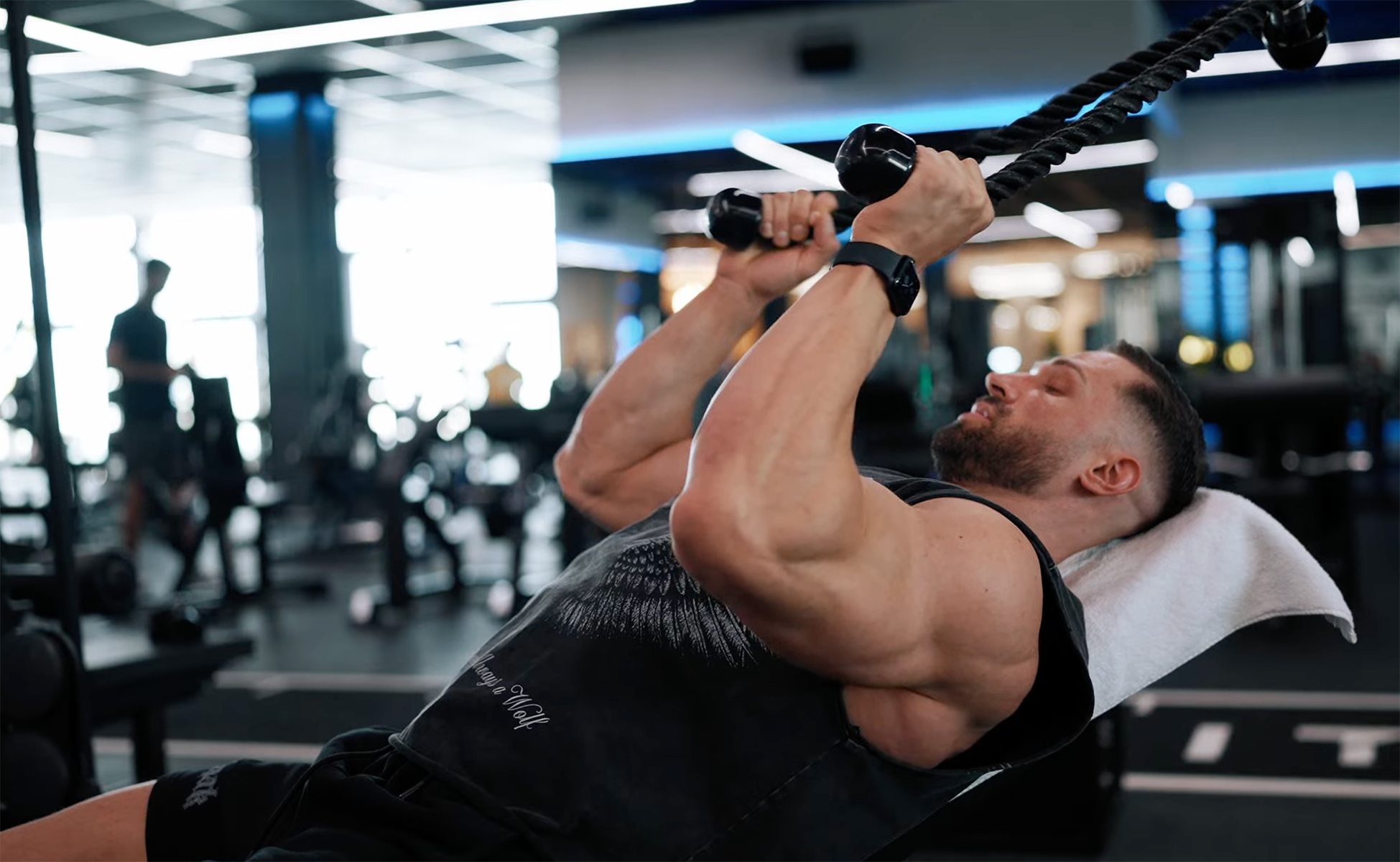
Partial reps get a bad reputation, but only because most people use them the wrong way. When they’re performed intentionally — with control, tension, and good mechanics — they’re one of the best tools for sculpting detail into a muscle.
I don’t use partial reps to cheat.
I use them to extend the tension when the full range of motion is no longer possible without losing quality. And that’s the key difference.
Here’s when partial reps work best:
• At the end of a set, after clean full-range reps become impossible
This is the perfect time to shorten the movement and keep tension exactly where you want it. The muscle is already fatigued — partials let you finish the job without breaking form.
• When the bottom portion of the rep activates the wrong muscles
Many exercises shift tension to the triceps, traps, or joints at the bottom. Using partials avoids the “danger zone” and keeps the movement in the target area.
• When you want to create a dense, controlled pump without heavy weight
On machines especially, partial reps let me maintain constant pressure on the muscle. I don’t bounce. I don’t swing. I just stay in the range where the muscle burns the most.
The sculptor’s rule:
Use partial reps to add quality — never to replace it.
Try adding 5–10 controlled partial reps at the end of your next shoulder, chest, or back set. You’ll feel the difference immediately, and your physique will show it over time.