
You can spot ego lifting from across the room. The weight gets loud. The tempo disappears. A set that was supposed to train a muscle turns into a full-body negotiation—hips swinging, shoulders rising, lower back helping, face clenched like suffering automatically equals progress.
I get why it happens. Strength feels good. Numbers feel clean. And gyms have changed—cameras everywhere, clips getting posted, little moments turning into performances. The problem is that ego gives you a quick win and then sends you the bill later. You leave feeling like you did something huge, and then weeks go by and the weak point you were trying to fix still looks exactly the same.
Most ego lifting isn’t someone being reckless on purpose. It’s usually a small compromise that becomes your default. A little momentum on curls turns into the only way you curl. A shrug on lateral raises creeps in and suddenly your traps finish every “shoulder day.” Rows become a lower-back endurance event because the torso starts rocking to drag the weight through. You still finish the set, so your brain calls it progress. Meanwhile the target muscle quietly stops being the limiter—and when that happens, the adaptation you want stops happening too.

Bodybuilding doesn’t reward what you move once. It rewards what you can place on the right tissue, repeatedly, week after week. The body is efficient. It will always find the easiest path to complete a rep, especially when fatigue hits. That’s why ego lifting is such a trap: it teaches your body to rely on shortcuts. Over time, you build the compensation pattern more than you build the physique.
This is where control becomes everything—especially the negative. People love the push, the squeeze, the moment the weight goes up. Then they drop the weight like the rep is finished. When you slow the eccentric and keep your positions clean, the set becomes honest fast. Moderate weight starts feeling heavy. The pump goes where it’s supposed to go. Your joints feel better. Your technique gets sharper without you even trying to “think” it into place.
Ego shows up most when you’re tired, distracted, or comparing yourself to the room. It shows up when you’re filming and you want the set to look intense. It shows up with training partners who turn every exercise into a competition. And it shows up in prep, when energy is low and you try to compensate by forcing heavier loads even though your body is begging for precision. The funny part is that real progress usually looks calmer than people expect. The best sessions don’t look dramatic. They look controlled. They look repeatable. They look like someone doing their job.
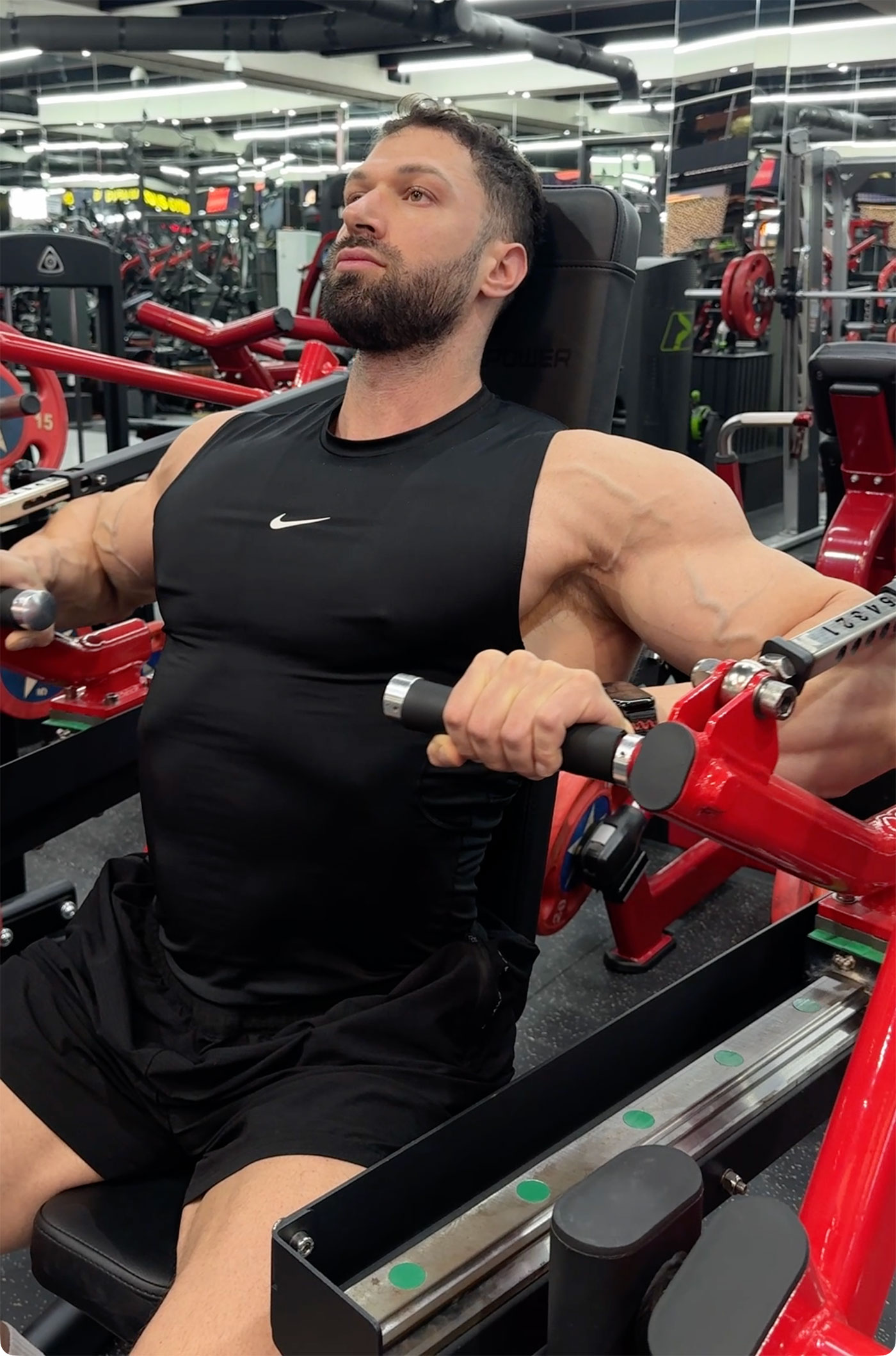
My standard is simple: I want the rep at the end of the set to look like the rep at the start. The tempo can slow, but the mechanics stay locked. If the pattern breaks, I adjust the weight or I end the set. I want the target muscle to be the reason I stop—chest on presses, delts on raises, lats on pulldowns—rather than my joints, momentum, or whatever muscle decided to hijack the movement.
If you’re chasing a better physique, ego has to be managed the same way you manage diet and recovery. Train hard, but train honestly. Make the weight heavier through control. Earn the reps you count. Keep execution clean enough that you can repeat it next week, then build on it. The loud version of training feels satisfying for an hour. The quiet version changes your body.