
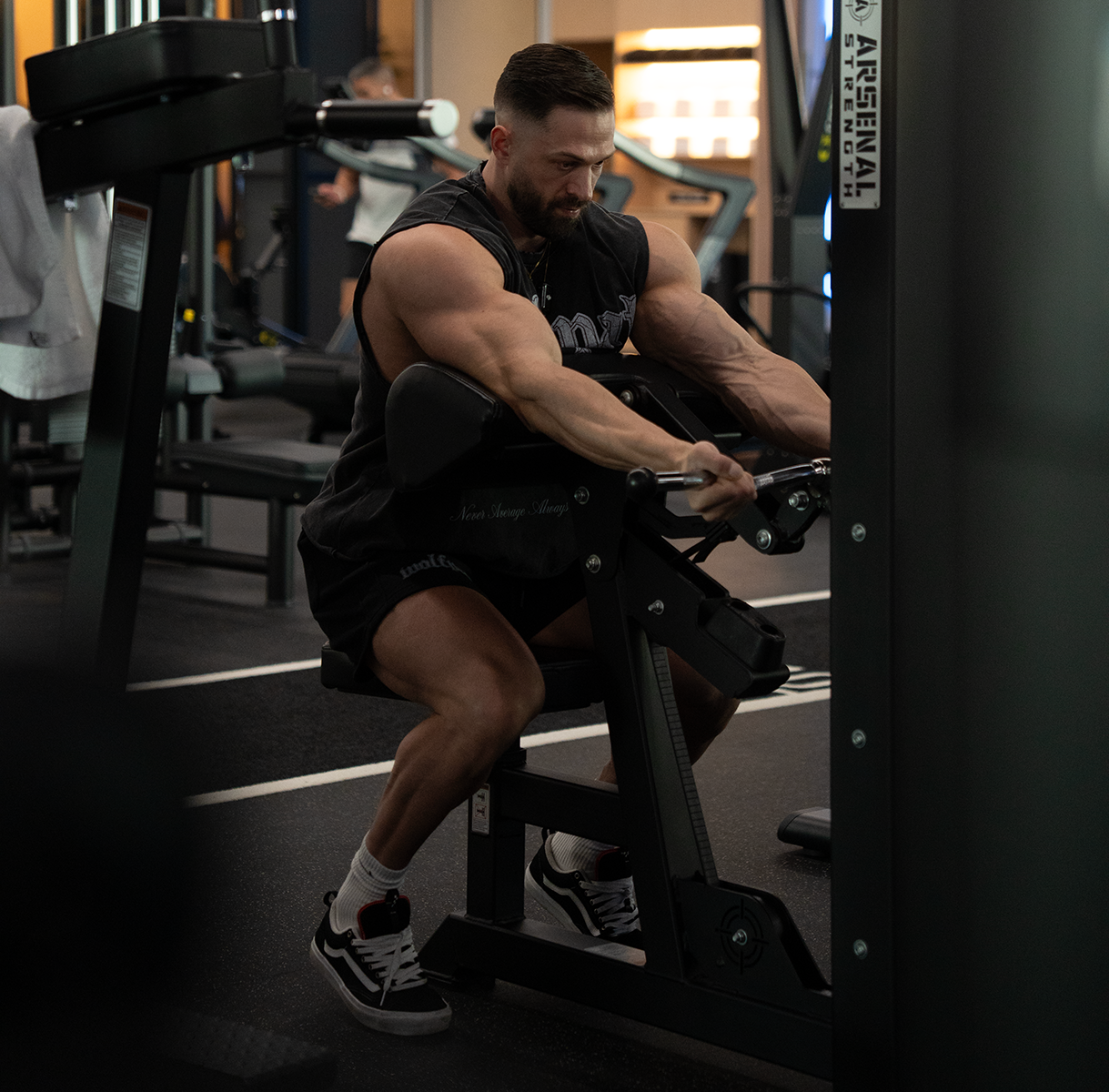
One thing that surprises a lot of people is that even professional athletes deal with muscle imbalances, uneven activation, and movement patterns that need to be corrected. It’s completely normal — your body is always trying to compensate for the stronger side, the dominant limb, or the easiest pathway.
Over the years, I’ve learned that fixing these patterns is one of the most important parts of training. If you don’t correct them, you strengthen the imbalance, not the muscle — and eventually your physique stops improving.
Today, I want to share how I work on imbalances, correct faulty mechanics, and improve neuromuscular control. These are the methods that help me train smarter, stay healthy, and keep progressing year after year.
1. Your Body Will Always Compensate Unless You Teach It Not To
The first thing to understand is this:
your body naturally shifts work toward the stronger side.
If one lat is more developed, if one shoulder fires earlier, or if one trap takes over, the body automatically follows that pattern — even if you don’t notice it.
For example, I have a left lat that’s weaker than the right. During certain pulling movements, my shoulder wants to rise or rotate forward instead of allowing the lat to contract. That’s the body compensating.
You don’t fix this by adding weight.
You fix it by teaching the muscle to activate correctly.
2. When the Form Breaks, I Stop and Reset the Rep
This is one of the most important rules in my training:
If the rep stops hitting the right muscle, I release the tension, reset the position, and start again.
Most people do the opposite — they keep pushing through bad reps.
But every bad rep teaches your body the wrong movement pattern. You’re reinforcing the compensation instead of correcting it.
A proper reset allows you to:
- realign your joints
- shift tension back to the target muscle
- rebuild proper form
- prevent the stronger side from taking over
- avoid unnecessary strain
Sometimes one correct rep is more valuable than ten wrong ones.

3. Small Technique Adjustments Make a Huge Difference
Imbalances aren’t always fixed with big changes — most of the time, it’s subtle adjustments that produce the breakthrough.
Some cues that help me correct activation include:
- Elbow slightly outward to engage mid-back instead of traps
- Chest lifted to open the shoulder line
- Reducing the bottom range to avoid triceps or traps taking over
- Driving the elbow toward the hip instead of pulling with the hand
- Leaning forward or back a few degrees to target a specific region
- Changing the bench angle to shift into the right plane of motion
When you start playing with angles and posture, you realize how much you can change the feel of a movement without changing the load.
This is how you target the weak side more effectively.
4. Machines Can Help You Rebuild Control
Free weights are great, but when I’m fixing an imbalance or trying to re-learn the correct activation, machines often work better.
Why?
Because machines:
- stabilize the movement for you
- limit compensation
- help you isolate the target muscle
- keep tension constant
- give you the chance to focus entirely on feeling the right muscle
When one side is weaker, your body tries to twist, rotate, or hitch to help — machines make those shortcuts harder.
They’re a great tool for correcting technical issues.

5. Off-Season Is the Best Time to Fix Imbalances
Many athletes try to correct movement patterns during prep, but that’s the hardest time to do it. Low calories mean low energy, and your nervous system is already fatigued.
The off-season is when I focus the most on:
- re-learning the correct motor pattern
- improving activation in the weak areas
- training with slightly higher calories
- giving the muscle enough recovery to adapt
- building balanced strength from both sides
If you fix the movement pattern now, the muscle grows more evenly when you start increasing intensity again.
That’s one of the secrets to long-term improvement.

6. Train Smart, Not With Ego
I say this often because it’s true:
Weight doesn’t matter if it’s not hitting the right muscle.
Training smart means:
- choosing form over load
- stopping bad reps before they become habits
- working on activation first, intensity second
- accepting that the weak side will fatigue earlier
- adjusting your technique instead of forcing it
If you let your ego run the session, you’ll end up reinforcing every imbalance you already have.
If you train with your mind, you fix them.
Final Thoughts
Correcting imbalances is one of the most advanced — and most important — parts of bodybuilding. Anyone can lift heavy. But not everyone can feel the right muscle working, notice when it stops working, and adjust in real time.
When you commit to proper activation, resetting bad reps, improving technique, and fixing movement patterns during the off-season, your physique changes dramatically. Your poses look cleaner. Your strength becomes more balanced. And your progress becomes sustainable.
This is how you build a body that grows evenly, performs well, and lasts.