
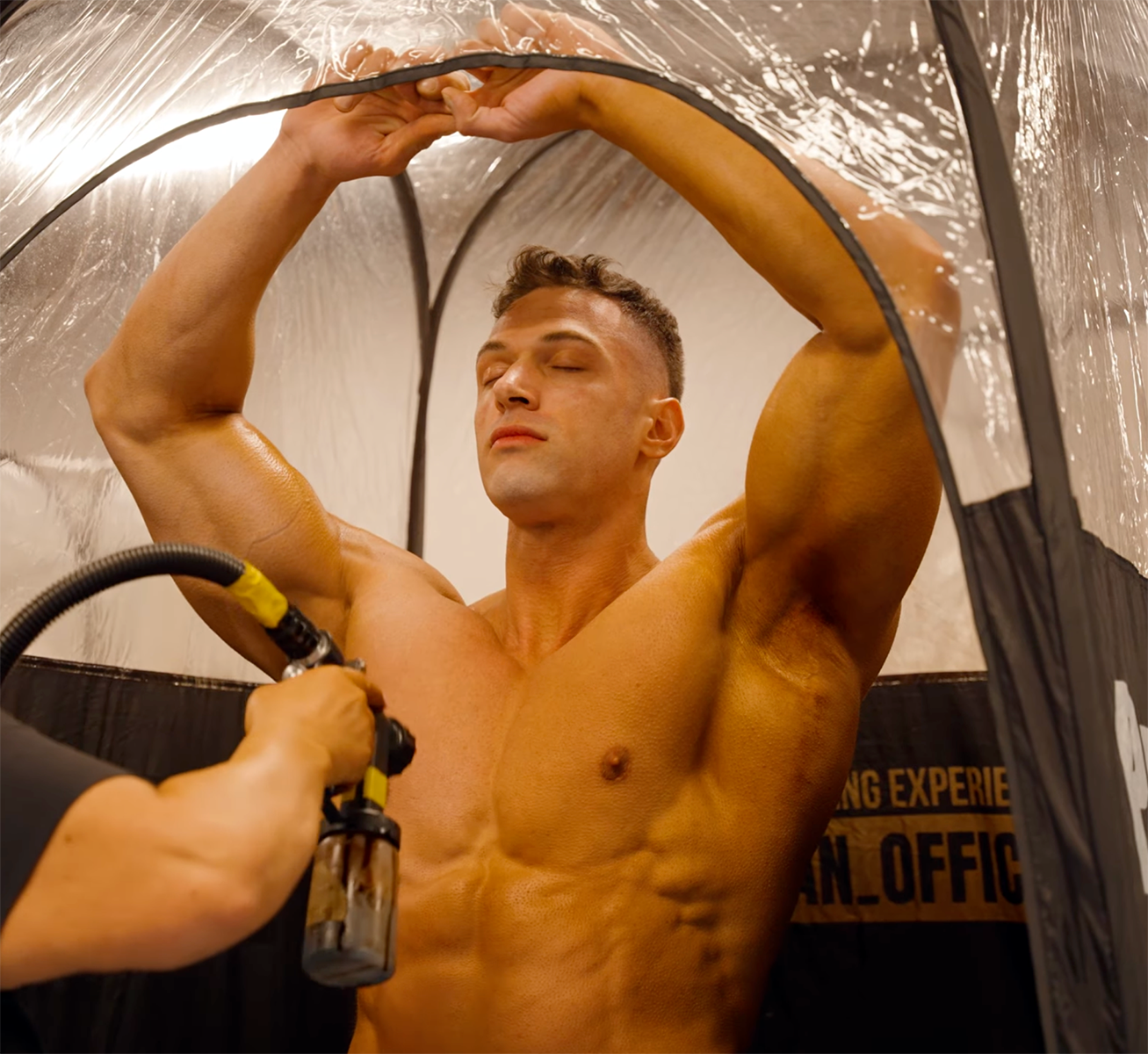
If you’re new to competitive bodybuilding or curious about what this world actually looks like from the inside, I’d love to share my experience with you. I’ve been competing since 2018, when I earned my IFBB Pro Card at the Dennis James Classic in Germany, and since then I’ve stepped on stages across Europe, won multiple pro shows, and qualified for the Mr. Olympia four times.
But before I ever stood under the bright lights, I was just a kid from Brescia, Italy who loved training, learning, and pushing myself. I had no idea how deep, demanding, and emotional this sport really is.
This guide will help you understand competitive bodybuilding from the perspective of someone who lives it every single day.
What Competitive Bodybuilding Actually Is
Bodybuilding is much more than lifting weights or building muscle.
It’s a sport focused on developing the physique according to strict criteria: balance, symmetry, proportions, shape, and muscularity — all while maintaining the ability to pose confidently under pressure.
Every division has different standards. The one I compete in, Men’s Physique, has a very specific aesthetic:
What Judges Look for in Men’s Physique
In Men’s Physique, judges are looking for a clean V-taper, symmetry, sharp conditioning, and confident presentation. Specifically, they look for:
- Broad shoulders with a pronounced V-taper
- A tight, clean waist
- Balanced upper-body development
- Excellent conditioning (lean but not extreme graininess)
- Proportional arms, delts, chest, and back
- Overall stage presence, confidence, and flow
- Board shorts that cover the legs, meaning lower-body size matters less
- No extensive posing routines — only quarter turns
What separates Men’s Physique from Classic Physique or Open Bodybuilding is not just size, but style. The division rewards aesthetic lines, clean details, and the ability to present yourself like a modern athletic model — not a mass monster.

How You Become an IFBB Pro — And How You Reach the Olympia
People often assume that “going pro” just happens when you win a show. It’s not that simple.
1. Earning an IFBB Pro Card
To become an IFBB Pro, you must:
- Compete in NPC regional shows
- Qualify for a national-level show
- Win your class at a designated Pro Qualifier
- Then win the overall or meet the specific Pro Card criteria
I earned mine at the 2018 Dennis James Classic, one of the biggest Pro Qualifying shows in Europe. I still remember the moment: standing on stage, hearing my number called, and realizing that I was officially an IFBB Pro athlete — something I had worked so hard to attain.
2. Qualifying for the Olympia
Becoming a pro is just the start — from that point on, every competition matters because each win moves you closer to the ultimate goal: qualifying for the Olympia. The Mr. Olympia is the highest stage in bodybuilding — where the best athletes in the world are measured side by side. It’s the contest Arnold Schwarzenegger dominated in the 1970s — and it’s a big part of what turned him into a global icon.
Olympia qualification rules can change from year to year, but the principle stays the same: you have to earn your place. In most seasons, the clearest path is simple — win an IFBB Pro show during the qualifying window, and you’re in. In some years, athletes can also qualify through strong performances across multiple shows, depending on the system in place.
I’ve qualified four times, including wins at major events like the 2024 Europa Pro and the Pro Muscle Pro in Italy — achievements that still mean the world to me.

How a Bodybuilder Prepares for a Show
Most people see the stage photos, but the real work happens in the months before. Preparation has two main phases:
The Off-Season: Building the Foundation
Despite the name, off-season doesn’t mean “off.” This is when I focus on:
- improving weak points
- experimenting with new techniques
- eating more calories to grow
- training with higher loads
- staying hydrated and healthy
- letting my body recover from the demands of prep
In many of my YouTube training videos, you’ll see me do highly technical sets — not just lifting heavy, but adjusting angles, focusing on slow negatives, and developing better mind-muscle connection. Off-season is when I fix imbalances (like when my left lat or biceps lag behind) and build the improvements that judges will eventually see on stage.

Prep Season: Shaping the Final Physique
Prep is the hardest part of this sport. During these weeks, everything becomes more precise:
- calories drop
- cardio increases
- energy levels swing
- training requires incredible focus
- every set matters
- you fight through low motivation
- and your mind becomes your strongest tool
In my videos, you’ll often hear me talk about controlling intensity by feel, using lighter loads with better technique, or shortening rest times to bring more detail to the muscle.
Prep requires discipline like nothing else. Some days you feel invincible. Other days you’re exhausted, hungry, and wondering whether the sacrifice is paying off.
But that’s the reality of competing.

The Emotional Highs and Lows of Bodybuilding
Bodybuilding is not only a physical sport — it’s emotional.
Some of The Highs:
- Winning your first pro show
- Qualifying for Olympia
- Seeing improvements you’ve worked years for
- Feeling the support of fans around the world
- Sharing your journey with teammates and friends
There’s nothing like stepping on stage after months of struggle and finally showing the world what you built.
And The Lows:
- Missing a win you hoped for
- Placing lower than expected
- Handling judges’ feedback (which can sometimes feel subjective and arbitrary at first)
- Waking up depleted, training anyway
- Pushing through injury or imbalance
- Traveling to shows, only to fall short
I’ve had seasons where everything clicked, and others where nothing went the way I imagined. Sometimes you put your heart and soul into prep, arrive at the show in the best shape of your life, and still don’t place where you expected. That’s part of the sport, and part of why mental strength matters as much as physical conditioning.
Show Day: The Moment Where You Finally Let Go
So after months — no, years — of intense training, show day finally arrives. This might surprise you, but show day is not the hardest day.
It’s the easiest.
All the hard work — every rep, every gram of food measured, every cardio session — is already done. You can’t build new muscle. You can’t change your conditioning. You can’t fix anything last-minute.

On show day, your only job is to:
- relax
- pump up
- pose with confidence
- enjoy the moment
- celebrate your discipline
- and share your hard work with the world
No more pressure. No more stress.
Just the joy of finishing what you started. A celebration.
Why I Love This Sport
So that gives you a real sense of what competitive bodybuilding looks like from the inside — starting with a local show, where you’re just trying to learn the basics and prove something to yourself, and eventually moving into a world where every detail matters. You train with purpose, you learn how to diet and pose, and you realize that the hardest part isn’t stepping on stage — it’s everything you have to do for months when nobody is watching and nobody is cheering.
As you climb into higher-level competitions, the process becomes more intense and the margin for error gets smaller. Once you earn your Pro Card, you’re no longer competing for experience — you’re competing for wins, for qualification, and for the chance to stand on the Olympia stage alongside the best in the world. And along the way, you experience the full range of emotions this sport brings: the excitement of progress, the frustration of setbacks, and the challenge of accepting results that don’t always match what you hoped for.
Bodybuilding has taken me across the world and taught me more than I expected — not just about training, but about how to handle pressure, stay consistent, and keep improving even when the outcome isn’t guaranteed. And I’m not finished. My next stage will be the Arnold Classic in Columbus, Ohio this March — one of the biggest events in the sport, second only to the Olympia — and I’m deep in the work right now.
To learn more about the Road to Olympia, you can follow a video series I shared in 2025 on YouTube.
